 Japan
Japan – Fuji 3,776m and Kumano Kodo trek
Tokyo, Fuji-san 3,776 m (optional), Kawaguchiko, Kumano Kodo, Yunomine Onsen, Nachi Katsuura
- Departure
- May 8–18, 2027
- Duration
- 11 days / 10 nights
- Highest point
- 3,776 m
- Difficulty
- T2 K3 V4 Highest grades on the tour, Mountaineering Association of Serbia scale. T2: demanding trail; K3: 7 to 9 hours walking; V4: over 1,300 m ascent.
- Time difference
- +7 h When it is 12:00 in Belgrade, it is 19:00 in Japan. Tip: for a few days before departure, go to bed and get up half an hour to an hour earlier each day, so the time change is easier on you.
- Price per person
- 2,150 EUR
About the adventure
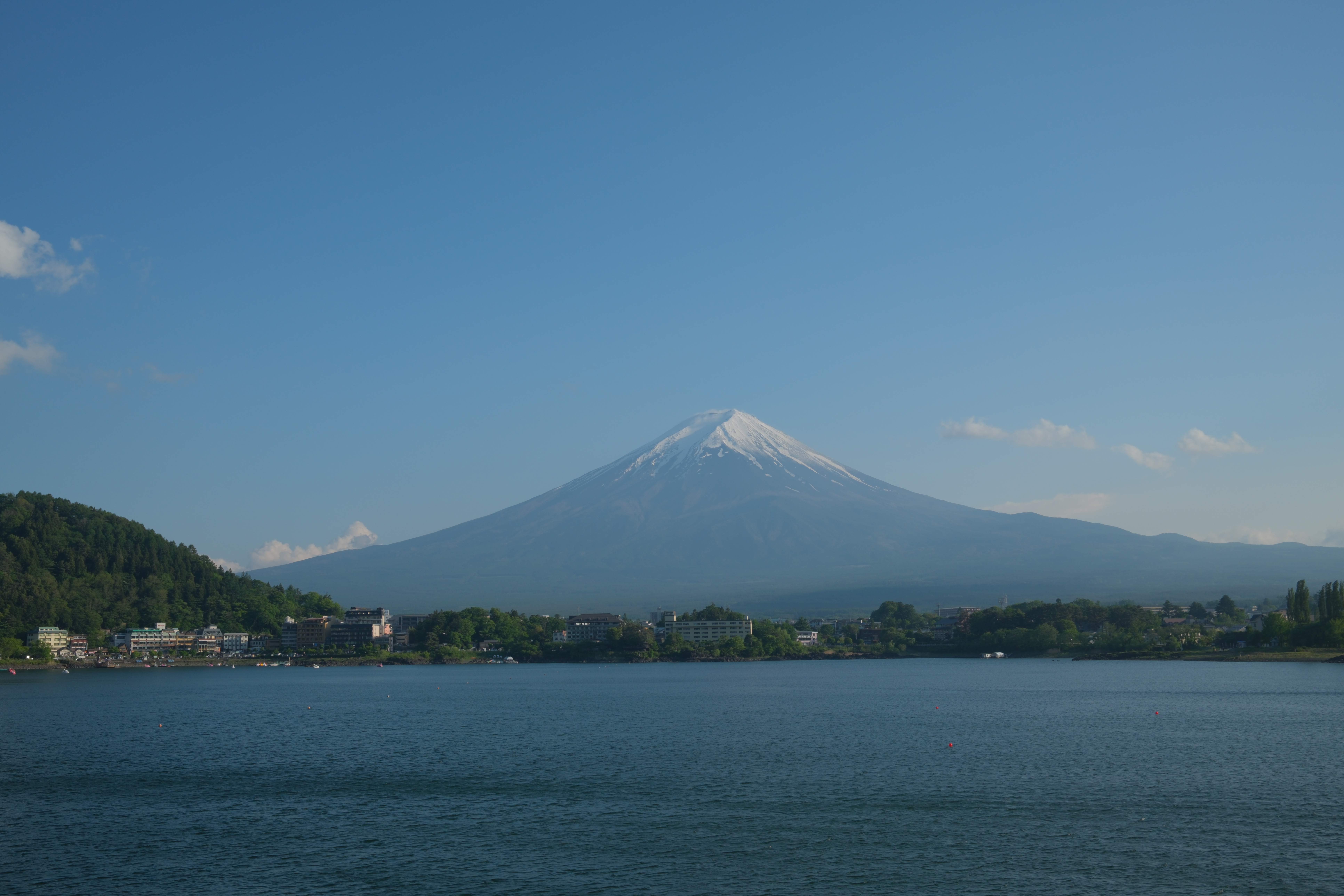
Japan! The land of the rising sun, which combines ultra-modern city life with ancient spirituality and unspoilt nature. This adventure takes you from Tokyo, via Lake Kawaguchiko beneath the highest peak in Japan – Fuji-san (3,776 m) – to the ancient pilgrimage trails of the Kumano Kodo on the Kii Peninsula, which are part of the UNESCO World Heritage.
The Kumano Kodo is a network of ancient pilgrimage routes dating back more than 1,000 years. The trails lead through dense forests of Japanese cedar, traditional villages and on to the three great Kumano Sanzan shrines. You will enjoy traditional Japanese ryokan accommodation, relaxing hot springs (onsen) and the freshest tuna in the world in the fishing town of Nachi Katsuura. This adventure requires good physical fitness, but promises a unique cultural and natural experience.
The ascent of Fuji-san is optional. In May, Fuji is outside the official season – the mountain is covered in snow, with no crowds or tourists, and the ascent is a genuine snow mountaineering tour with crampons and an ice axe. For participants who do not want to make the ascent, a full alternative programme has been prepared in the Fuji Five Lakes region, with several options of different difficulty.
A note on the dates: The trip is deliberately set straight after Japan’s Golden Week (in 2027 it runs from 29 April to 5 May) – the biggest holiday week in Japan, when accommodation, transport and all attractions are crowded and considerably more expensive. By arriving on 8 May we avoid the domestic crowds, while still catching pleasant spring weather and the snow that is still on Fuji.
Itinerary
Day 1(Saturday, 8 May): ARRIVAL IN TOKYO (NARITA)
Arrival at Narita Airport (NRT). Transfer to the hotel in Shinjuku, which takes about an hour and a half. The afternoon and evening are free for a first look around the city – Shibuya, Shinjuku or Akihabara. Overnight stay.
Day 2(Sunday, 9 May): TOKYO – KAWAGUCHIKO
Breakfast. Free time in Tokyo for buying hiking equipment and shopping, resting or sightseeing. Tokyo is a paradise for hiking gear – Mont-bell in Shinjuku (a Japanese brand of excellent quality), L-Breath (10 floors of equipment, 2 minutes from Shinjuku Station), Kojitsu Sanso in the Kanda district, Ishii Sports, as well as The North Face, Arc’teryx and Patagonia stores on Meiji-dori between Harajuku and Shibuya. Sightseeing – the Senso-ji temple in Asakusa, the gardens of the Imperial Palace, Takeshita-dori street in Harajuku or the Tokyo Skytree tower. In the afternoon, a highway bus from the Shinjuku Expressway Bus Terminal to Kawaguchiko (about 2 hours). Accommodation in a hotel on Lake Kawaguchiko with a view of Fuji-san. Overnight stay.
Days 3–4(Monday and Tuesday, 10 and 11 May): FUJI-SAN (optional) AND KAWAGUCHIKO3,776 m
- Route
- Fujinomiya 5th Station → the summit of Fuji-san
- Altitudes
- 2,400 m → 3,776 m
- Elevation gain / loss
- ▲ approx. 1,376 m
- Activity duration
- approx. 9 hours (ascent approx. 5 hours)
- Grade (PSS)
- T2 K3 V4
Both days are reserved with the agency Kanto Adventures – one for the ascent of Fuji-san, the other for the tour of Lake Kawaguchiko. The order is not fixed in advance: the agency makes the final decision on the day of the ascent 48 hours earlier, based on a professional Japanese mountain forecast. This arrangement greatly increases the chances of a successful summit, because the day with better weather conditions is chosen.
FUJI-SAN ASCENT DAY (optional).
Departure at 05:30 from Kawaguchiko station. A stop at a shop (7-Eleven, Lawson or another) for breakfast and food for the ascent. Arrival at the Fujinomiya 5th Station (2,400 m) at about 06:30 and preparation of equipment. Fujinomiya is the highest of the four 5th Stations on Fuji and offers the shortest approach to the summit. The trail leads through volcanic terrain covered in snow, with a view of the sea of clouds below us. The ascent takes about 5 hours. Arrival at the summit of Fuji-san (3,776 m) at about 11:30 – photographs and a walk around the crater. The descent begins after a short break at the top. Return to the vehicle at about 15:30, arrival in Kawaguchiko at about 17:00. Overnight stay.
The guide of the agency teaches the group the techniques of using crampons and an ice axe, including self-arrest, and practises them with the group during the ascent itself.
LAKE KAWAGUCHIKO TOUR DAY (for all participants).
Bicycle hire and a ride around Lake Kawaguchiko – a route of about 20 km with a constant view of Fuji-san. You can choose between regular or electric city bikes. Along the way there are stops at museums, cafés and viewpoints. An option to visit the Chureito Pagoda – one of the most famous viewpoints of Fuji-san. A free afternoon in Kawaguchiko – visiting local onsen, shops and restaurants serving the speciality hoto (thick udon noodles in pumpkin soup). Overnight stay.
ALTERNATIVE PROGRAMME ON THE ASCENT DAY (for participants who are not climbing Fuji).
While one group climbs Fuji-san, the others choose one of the following options in the Fuji Five Lakes region – a detailed description of each is given in the “Optional programme” section further down: Mt. Mitsutoge (1,785 m) for those who want a proper hiking tour with the best panoramic view of Fuji, Mt. Tenjo (1,104 m) with the Kachi Kachi ropeway as an easier variant, the Narusawa and Fugaku lava caves for a visit without physical effort, or the Benifuji no Yu onsen for a day of complete rest with a view of Fuji.
On Tuesday evening, after both days, a highway bus back to Tokyo. Overnight stay in a hotel in Tokyo.
Note This is the most demanding day of the programme. No climbing rope or fixed protection is used, but crampons and an ice axe are mandatory on the snow slopes, which is why the day is graded with the technical grade T2. The activity lasts about nine hours (K3), and covers nearly 1,400 m of ascent (V4) – more than any other day of the programme.
Day 5(Wednesday, 12 May): TOKYO – NANKI-SHIRAHAMA – TANABE
- Flight
- JL219 Tokyo (Haneda) – Nanki-Shirahama, 16.30 – 17.40
Breakfast. A free morning in Tokyo for last sightseeing or shopping. An afternoon flight to Nanki-Shirahama from Haneda Airport (Japan Airlines). Bus transfer from Shirahama to the town of Tanabe – the starting point for the Kumano Kodo. Accommodation in a hotel. Overnight stay.
Day 6(Thursday, 13 May): TANABE – KOBIRO-OJI – YUNOMINE ONSEN (Kumano Kodo trek)
- Route
- Kobiro-oji → Hosshinmon-oji → the Hongu valley
- Distance
- approx. 19 km
- Walking time
- 7–8 hours
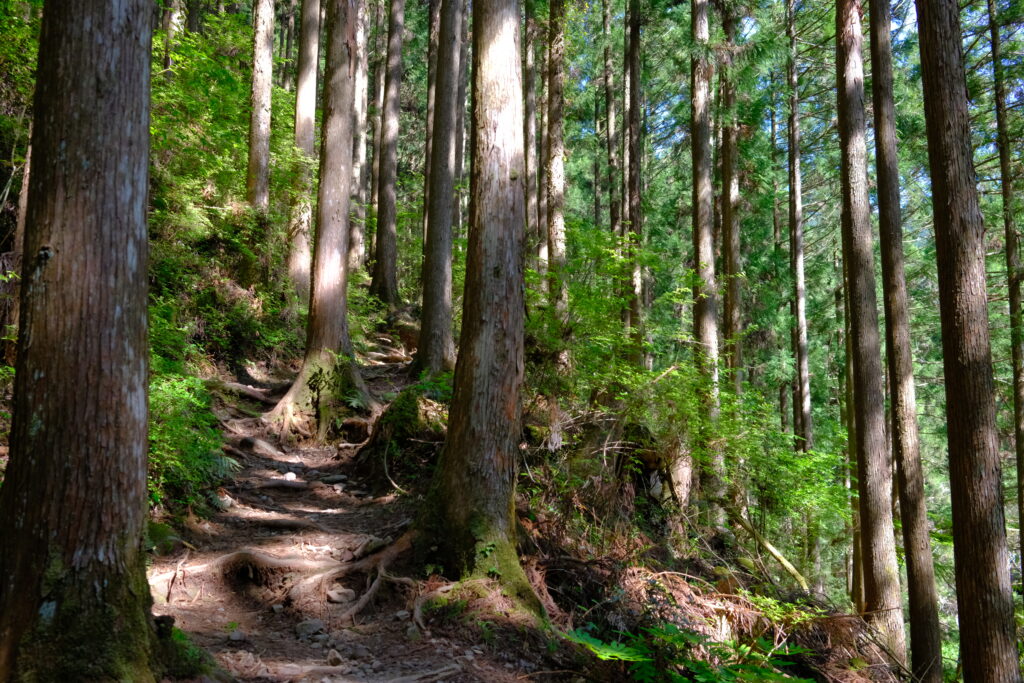
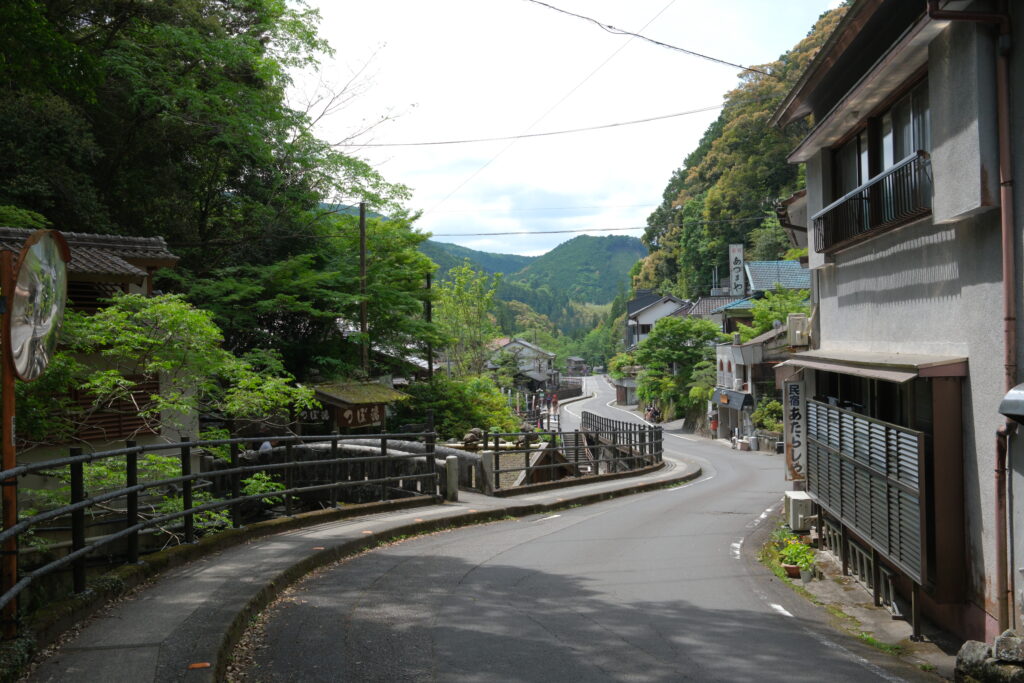
Breakfast. By bus from Tanabe to Kobiro-oji – one of the many sacred sub-shrines along the Kumano Kodo trail. The trek begins at Kobiro-oji and leads through forests of Japanese cedar, trees 500 to 800 years old, crossing mountain ridges with a view of the Kumano valley. Passing through villages on the ridges and many oji shrines, the trail leads to the Hosshinmon-oji gate – the symbolic gate through which pilgrims enter the sacred area of Kumano. A descent through the forest to the Hongu valley, from where we continue by local bus to Yunomine Onsen – one of the oldest hot springs in Japan, discovered about 1,800 years ago. Accommodation in a traditional ryokan: tatami mats, futon beds, yukata robes and bathing in thermal water (rotenburo – open-air bathing). Overnight stay.
Note We visit the Kumano Hongu Taisha shrine the next day, along the Dainichi-goe trail.
Day 7(Friday, 14 May): YUNOMINE ONSEN – KUMANO HONGU TAISHA – OYUNOHARA
- Route
- Yunomine Onsen → Dainichi-goe → Kumano Hongu Taisha → Yunomine Onsen
- Distance
- approx. 2 km one way
- Walking time
- 1–2 hours one way
- Grade (PSS)
- T1 K1 V1
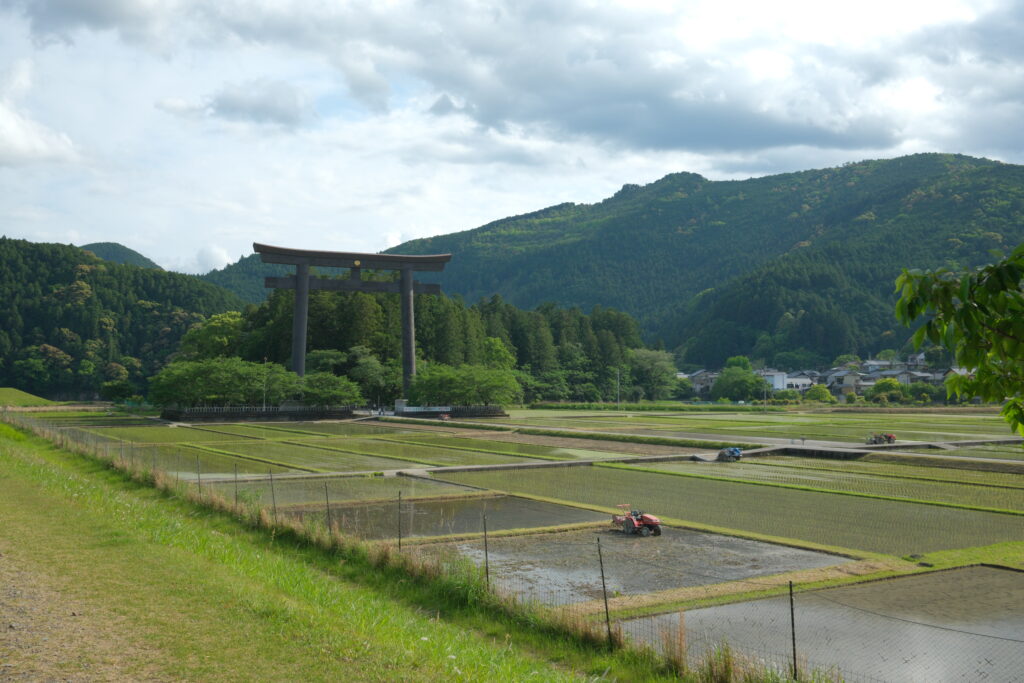
Breakfast in the ryokan. A day of rest and relaxation in the hot springs. A walk along the Dainichi-goe trail (about 2 km, 1–2 h one way) – a short but wonderful trail through the forest with stone steps and Jizo statues – to the great shrine of Kumano Hongu Taisha, one of the three great Kumano shrines. A visit to the huge Oyunohara torii gate – the largest torii gate in the world (34 m high, 42 m wide), which stands amid rice fields on the bank of the Kumano-gawa river, on the spot where the shrine originally stood before a flood destroyed it in 1889. Return to the onsen. Enjoy a traditional Japanese dinner (kaiseki ryori) in the ryokan. Overnight stay.
Day 8(Saturday, 15 May): KOGUCHI – KUMANO KODO TREK TO NACHI TAISHA870 m
- Route
- Koguchi → Ogumotori-goe → Kumano Nachi Taisha
- Distance
- approx. 16 km
- Walking time
- 6–7 hours
- Elevation gain / loss
- ▲ approx. 1,200 m
- Highest point
- 870 m
- Grade (PSS)
- T1 K2 V3
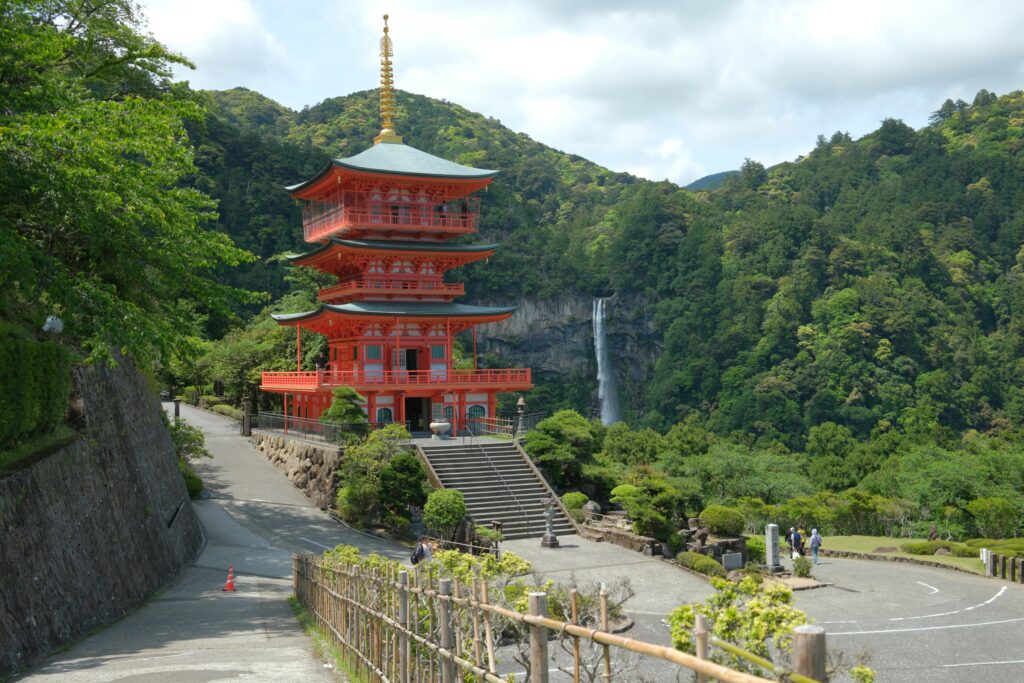
An early breakfast. A bus transfer to the village of Koguchi. The start of the hardest part of the trek – the Ogumotori-goe pass, the most demanding section of the entire Nakahechi route. A trek of about 16 km that takes 6–7 hours. The trail climbs steeply through dense forests of centuries-old cedars to the highest point at 870 m, and then crosses three mountain passes. From the Funami-toge pass, a view opens onto the Pacific Ocean and the coast of the Kii Peninsula. A descent through the forest to the Kumano Nachi Taisha shrine – one of the three great Kumano shrines, with a view of Nachi-no-Taki (133 m) – the highest waterfall in Japan, which flows down beside the red-orange pagoda of the Seiganto-ji temple. By bus to Nachi Katsuura (Kii-Katsuura). Accommodation in a hotel. Overnight stay.
Day 9(Sunday, 16 May): NACHI KATSUURA – TUNA AUCTION – FLIGHT TO TOKYO870 m
- Flight
- JL214 Nanki-Shirahama – Tokyo (Haneda), 13.45 – 14.55
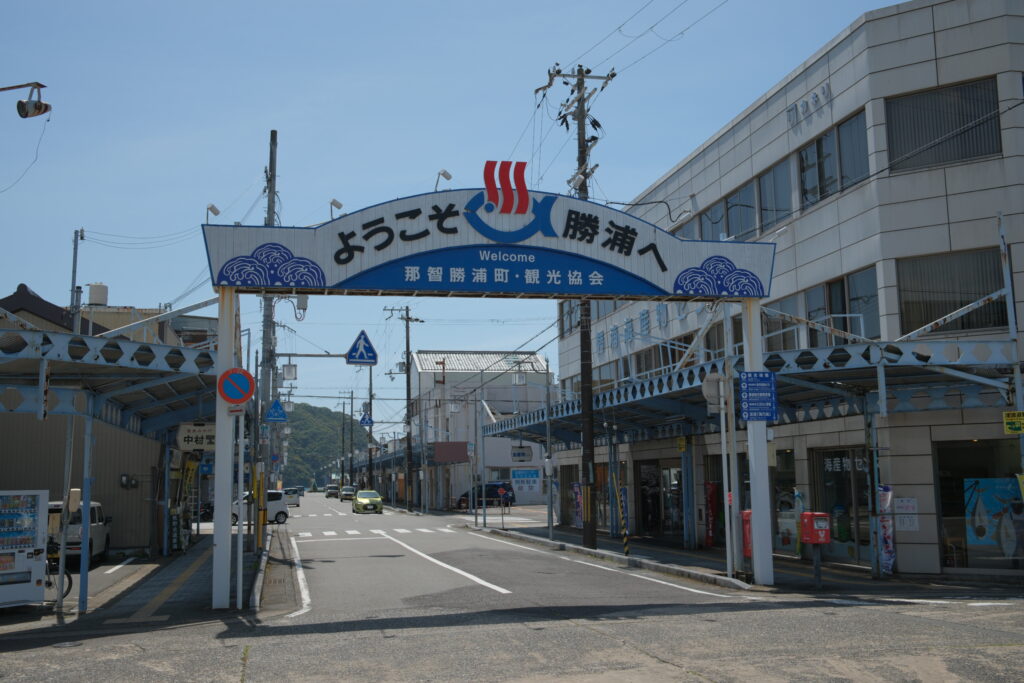
An early start. A visit to the famous tuna auction at the fish market in Katsuura – one of the largest fresh tuna markets in Japan, right after the Toyosu market in Tokyo. The auction starts at 07:00 and can be watched from a platform on the second floor (Katsuura Nigiwai Market). After the auction, breakfast with the freshest premium tuna sashimi in one of the local restaurants – honmaguro (bluefin tuna) in all three varieties: otoro (the fatty part), chutoro (medium fatty) and akami (the red part). Free time for a stroll around the harbour and shopping. Transfer to Nanki-Shirahama Airport. An afternoon flight to Tokyo (Haneda). Transfer to the hotel. A free afternoon in Tokyo. Overnight stay.
Day 10(Monday, 17 May): TOKYO – FREE DAY
Breakfast. A free day in Tokyo – the Tsukiji Outer Market, the Meiji-jingu shrine, Ginza or Akihabara. Souvenir shopping. Overnight stay.
Day 11(Tuesday, 18 May): DEPARTURE FROM TOKYO
Breakfast and check-out from the hotel, with the option of leaving luggage at reception. We have the whole day at our disposal, as the transfer to the airport is only in the afternoon. The day can be used for some last shopping and souvenirs (Ginza, Shibuya, Harajuku), for sightseeing that we did not manage to fit in – the Senso-ji temple in Asakusa, the gardens of the Imperial Palace or the Tokyo Skytree tower – or for a half-day excursion to the seaside town of Kamakura, with its great bronze statue of the Buddha and numerous temples, which is about an hour from Tokyo by train. In the afternoon we return to collect our luggage and leave for Narita Airport by organised transport, for the participants’ own flights. This ends the programme.
Flights
Outbound · Day 5 · 12 May 2027
- JL219Tokyo (Haneda) (HND) → Nanki-Shirahama (SHM)16.30 – 17.40
Return · Day 9 · 16 May 2027
- JL214Nanki-Shirahama (SHM) → Tokyo (Haneda) (HND)13.45 – 14.55
Times are local. Flight schedules may change in line with airline changes.
Trip facts
- Tour operator: Top Holidays Travel DOO Beograd, Ogranak EST Adventure
- Destination: Japan – Honshu (Tokyo, the Fuji Five Lakes region, the Kii Peninsula)
- Duration: 11 days / 10 nights
- Dates: May 8–18, 2027
- Meeting point: Tokyo
- Highlights: Tokyo, Kawaguchiko, Fuji-san (3,776 m, optional), Tanabe, Kumano Kodo – Nakahechi route, Yunomine Onsen, Kumano Hongu Taisha, Oyunohara, Kumano Nachi Taisha, Nachi Katsuura
- Highest point: Ogumotori-goe – 870 m (core programme), Fuji-san – 3,776 m (optional ascent)
- Trekking route: Kumano Kodo – Nakahechi (UNESCO World Heritage)
- Type of trip: Pilgrimage trekking + a cultural tour + an optional winter ascent
- Grade (PSS): core programme T1 K2 V3, with the optional ascent of Fuji-san T2 K3 V4 (grades for each day are given with every walking day)
Transport
- Domestic flights Tokyo (Haneda) – Nanki-Shirahama and Nanki-Shirahama – Tokyo (Haneda) (Japan Airlines)
- Airport – hotel – airport transfers
- Highway bus Tokyo (Shinjuku) – Kawaguchiko – Tokyo (return ticket)
- Bus transport on all routes in Japan according to the programme (Shirahama – Tanabe, Tanabe – Kobiro-oji, Hongu – Yunomine, Koguchi – Nachi, Nachi Katsuura – Nanki-Shirahama)
- Transport from Kawaguchiko to the Fujinomiya 5th Station and back – only for participants in the optional ascent, provided by the agency Kanto Adventures
Note: transport within Tokyo (metro and JR lines) is not included in the price, nor is local transport as part of the alternative programme on the Fuji-san ascent day.
Accommodation
- Accommodation at the Shinjuku Washington Hotel Annex 3* in Tokyo, in twin rooms, 4 nights in total with breakfast
- Accommodation in a hotel on Lake Kawaguchiko, with a view of Fuji-san, in twin rooms, 2 nights with breakfast
- Accommodation in a hotel or ryokan in Tanabe, in twin rooms, 1 night with breakfast
- Accommodation in a traditional ryokan in Yunomine Onsen, with a thermal bath, 2 nights on half board
- Accommodation in a hotel in Nachi Katsuura, in twin rooms, 1 night with breakfast
The Shinjuku Washington Hotel Annex 3* is in the Nishi-Shinjuku district, right next to the Tokyo Metropolitan Government building. It is an eight-minute walk to Shinjuku station and five to Tochomae station on the Oedo line – which is also convenient because the bus to Kawaguchiko leaves from the nearby Shinjuku Expressway Bus Terminal. All rooms are non-smoking and air-conditioned, with a private bathroom, TV, fridge and free Wi-Fi. The hotel has a 24-hour reception, restaurants, a shop and a self-service laundry.
Adventure costs
Meeting Tokyo: 2,150 EUR (without flights)
The adventure price includes:
- Domestic flights Tokyo (Haneda) – Nanki-Shirahama and Nanki-Shirahama – Tokyo (Haneda) (Japan Airlines)
- Airport – hotel – airport transfers
- Highway bus Tokyo (Shinjuku) – Kawaguchiko (return ticket)
- Bus transport on all routes in Japan (Shirahama – Tanabe, Tanabe – Kobiro-oji, Hongu – Yunomine, Koguchi – Nachi, Nachi Katsuura – Nanki-Shirahama)
- Bicycle hire for the tour of Lake Kawaguchiko
- The Kumano Kodo trek – Nakahechi route (Kobiro-oji – Hosshinmon-oji, Dainichi-goe, Koguchi – Kumano Nachi Taisha)
- Accommodation in a Tokyo hotel in twin rooms (4 nights, bed and breakfast)
- Accommodation in a hotel on the lake in Kawaguchiko (2 nights, bed and breakfast)
- Accommodation in a hotel or ryokan in Tanabe (1 night, bed and breakfast)
- Accommodation in a traditional ryokan in Yunomine Onsen with a thermal bath (2 nights, half board)
- Accommodation in a hotel in Nachi Katsuura (1 night, bed and breakfast)
- Luggage transfer between accommodations on the Kumano Kodo trail
- Tourist tax and onsen tax at the accommodations
- The services of a professional guide according to the programme
The adventure price does not include:
- International flights to and from Tokyo
- International health insurance (mandatory – see Conditions)
- The optional ascent of Fuji-san (see the “Optional programme” section)
- Alternative programme on the ascent day: Mt. Mitsutoge, Mt. Tenjo with the Kachi Kachi ropeway, the Narusawa and Fugaku lava caves, the Benifuji no Yu onsen – tickets, ropeway, local transport and the services of a local guide
- Transport within Tokyo (metro, JR lines)
- Lunches and drinks not listed in the programme
- Breakfast with tuna in Katsuura (entry to the auction is free)
- Tickets for museums, temples and shrines not listed in the programme
- Optional excursions and personal expenses
- Anything else not listed under “The price includes”
PAYMENT AND CANCELLATION TERMS
Payment terms:
- 10% upon booking / non-refundable
- 40% no later than 60 days before departure
- 50% no later than 30 days before departure
If a participant cancels:
- If you cancel 59–30 days before departure, 50% of the total amount paid up to that point is refunded
- If you cancel 29 days or fewer before departure, the amount paid is not refunded
This programme is subject to the General Terms of Travel (PDF, in Serbian). Licence, travel guarantee and complaints: Agency information.
Departures
- May 8–18, 202711 daysThis page2,150 EUR
There is one scheduled departure for this tour right now. If the date does not suit you, write to us and we will let you know when we open a new one.
Optional programme
The ascent of Fuji-san (3,776 m) – an off-season snow climb
The ascent is organised by the agency Kanto Adventures, by the Fujinomiya route, as a private one-day tour for our group. The agency provides crampons and an ice axe, as well as transport from Kawaguchiko to the 5th Station and back, and a certified mountain guide. Two days (Monday and Tuesday) are reserved so that the day with better weather conditions can be chosen.
The price depends on the number of participants. Japanese consumption tax of 10% is included in the price:
| Number of participants | Price per person (JPY) | Price per person (EUR) |
|---|---|---|
| 5 – 9 people | 37,950 | 220 EUR |
| 3 – 4 people | 46,750 | 270 EUR |
| 2 people | 65,450 | 370 EUR |
| 1 person | 117,700 | 670 EUR |
Prices in euros are converted at a rate of 175 JPY to 1 EUR and are finally confirmed 60 days before departure, at the current exchange rate. The maximum number of participants on one private tour is 9 people – if more apply, two separate groups are organised.
Alternative programme on the ascent day
For participants who are not going up Fuji-san, the Fuji Five Lakes region offers several options. All start from Kawaguchiko. Each participant chooses an activity for those two days when applying, and we book it before departure, together with a local guide for the excursions that need one. Like the ascent of Fuji-san, these activities are optional and are not included in the price of the trip:
- Mt. Mitsutoge (1,785 m) – a peak with one of the most beautiful panoramic views of Fuji-san in the whole region. The route from Kawaguchiko is about 12 km with 750 m of altitude difference and takes about 5.5 hours (PSS: T1 K2 V2). The northern variant leads past the Hahanoshirataki waterfall, where pilgrims ritually washed before climbing Fuji, and past the Kawaguchiko Asama shrine with its “heavenly” torii gate – 4 to 5 hours return. There is also a short variant from the car park on road 708: an ascent of about 2 hours and a descent of under an hour.
- Mt. Tenjo (1,104 m) and the Kachi Kachi ropeway – the easiest hiking option. By ropeway from the shore of Kawaguchiko to the Fujimidai viewpoint, then a gentle walk along the ridge (about 40 minutes) with a view of Fuji-san and the lake (PSS: T1 K1 V1). The trail continues in the direction of Mitsutoge for those who want a longer outing.
- The Narusawa (ice) and Fugaku (wind) lava caves – caves formed in the lava of Fuji, connected by a nature trail through the forest. No physical effort, and the temperature in the caves is about 0°C all year round.
- The Benifuji no Yu onsen (Lake Yamanaka) – a thermal complex with outdoor pools and a direct view of Fuji-san. Ideal for a day of complete rest while the rest of the group climbs.
Conditions
When applying, send a mountaineering CV and your passport to info@estadventure.com. Anyone who walks regularly or practises an aerobic sport can apply for this adventure. Participants should be able to walk 15–20 km with an ascent of 800–1,000 m. The Kumano Kodo section Koguchi – Nachi Taisha is the most demanding part of the trek, with about 16 km and 1,200 m of total ascent/descent.
Special conditions for the optional ascent of Fuji-san:
- The agency Kanto Adventures does not treat ascents between 1 and 15 May as hiking, but as a genuine snow mountaineering tour that requires crampons and an ice axe. For these dates the agency requires previous experience of walking or climbing on snow and reserves the right to refuse participants without that experience.
- The agency’s minimum fitness standard: the ability to run 5 km in under 35 minutes.
- Health insurance that expressly covers mountaineering using technical equipment (crampons, ice axe) and mountain rescue, including helicopter evacuation, is mandatory. Standard tourist policies usually exclude this. Japanese hospitals may ask uninsured patients for a large advance payment.
- If the guide judges that a participant is unable to continue safely, they may send them back from the trail before the 7th Station – the return to the 5th Station is then independent, while waiting for the rest of the group.
- If a participant is injured and needs help to descend, the ascent is called off for the whole group, with no refund.
- If the agency cancels the ascent because of weather conditions and both reserved days are lost, the amount paid for the optional ascent is refunded in full.
- Payment for the optional ascent: a 25% deposit at booking, the rest on the day of the ascent.
- Deadline for applying for the optional ascent: no later than 60 days before departure, when the final price per person is also confirmed.
Booking conditions:
- No later than 90 days before departure for the adventure.
PAYMENT AND CANCELLATION TERMS
Payment terms:
- 10% upon booking / non-refundable
- 40% no later than 60 days before departure
- 50% no later than 30 days before departure
If a participant cancels:
- If you cancel 59–30 days before departure, 50% of the total amount paid up to that point is refunded
- If you cancel 29 days or fewer before departure, the amount paid is not refunded
This programme is subject to the General Terms of Travel (PDF, in Serbian). Licence, travel guarantee and complaints: Agency information.
If the adventure is cancelled by the organiser:
In case of cancellation because too few people have signed up, the final deadline for notice of cancellation is 45 days before the date of departure. In that case all the money paid is refunded except the deposit for booking domestic flights.
Recommended gear
Equipment for all participants:
- Hiking backpack of 30 l to 40 l with a hip belt
- A transport bag for the rest of your things
- Trekking trousers (synthetic, quick-drying) x 2
- Gore-Tex jacket and trousers (or a rain poncho)
- Three-season hiking boots
- Socks – thermal and ordinary
- Synthetic T-shirts (not cotton!) x 5
- Base layers (base layer / Heat-tech)
- Fleece sweatshirt
- Light fleece gloves
- A hat or cap with a neck flap (sun protection)
- Sunglasses
- Headlamp with spare batteries
- Trekking poles
- Thermos (1 l)
- A waterproof backpack cover or dry bag (the Kii Peninsula is one of the rainiest areas of Japan)
- Towel and toiletries + a small towel for the onsen
- Medicines and vitamins
- Sunscreen SPF 50 and lip balm
- Power adapter (Japan uses type A sockets, 100 V – Serbian plugs do not fit)
- Cash in yen (the rural Kumano region is mostly cash; ATMs in 7-Eleven stores accept foreign cards)
- A rubbish bag (there are no public bins in Japan – everything is carried with you)
Additional equipment – only for the optional ascent of Fuji-san:
- Winter or three-season hiking boots compatible with crampons – not trail runners, not Hoka or similar shoes with a soft heel, not low shoes
- Gaiters
- Ski gloves (mandatory) + light fleece gloves
- A wool hat or balaclava
- Ski goggles or sunglasses (mandatory – to prevent snow blindness)
- Thermal socks
- Body warmers (can be bought in Japan)
- Food and snacks for about 8 hours of walking
- A backpack of at least 25 l with a hip belt (no shoulder bags)
Note: cotton clothing is not allowed on the ascent – synthetics dry quickly and keep you warm even when wet. Crampons and an ice axe are provided by the agency Kanto Adventures. For participants who are missing some equipment, hire is possible through the local service Yamarent (backpack, rain jacket and trousers, waterproof boots, fleece layer, trekking poles).
Important notes
- Travellers must give the agency a valid passport and a working phone number. The traveller is responsible for the validity of the travel document. The passport must be valid for at least 6 months after the date of return and have enough blank pages for entry into the country.
- Travellers must familiarise themselves with the regulations and entry requirements of the country they are travelling to, on the official websites of its authorities or of the country’s diplomatic and consular missions. They must also obtain all necessary travel documents and visas for themselves and their children and comply with the regulations of the countries they travel to, depart from or pass through.
- The organiser reserves the right to change individual elements of the programme in the event of unforeseen circumstances (weather conditions, safety reasons, changes in the work of local partners, flight schedules and the like), without affecting the overall quality of the trip.
- Travellers must have suitable travel health insurance, as well as insurance that covers mountaineering activities. For participants in the optional ascent of Fuji-san, the insurance must expressly cover mountaineering using technical equipment and mountain rescue, including helicopter evacuation.
- Rooms in Japanese city hotels are, as a rule, considerably smaller than the European standard. In traditional ryokan, guests sleep on futons on tatami mats, and the bathroom is most often shared, in line with Japanese tradition.
- Visa and entry requirements depend on the country of your citizenship. Each traveller is responsible for checking the current entry, transit and visa rules for their own passport well before departure and for obtaining all the necessary visas and travel documents.
- Travellers must respect the local laws and customs of the country they are visiting, as well as the instructions of the guide and the agency’s representatives during the programme.
- The signatory of the contract or the group representative must inform the other travellers about the travel programme, the payment terms and the General Terms of Travel of EST Adventure.
- Minors travelling without one or both parents must have a certified parental consent for crossing the border, in accordance with the applicable regulations.
- By signing the travel contract, the traveller confirms that they are familiar with the travel programme, the payment terms and the General Terms of Travel of EST Adventure.
- The strength of the Wi-Fi signal depends on the quality of the signal provided by the local provider chosen by the owner of the accommodation and on the number of users on the network at the time. The organiser cannot influence the quality of the Wi-Fi connection and is not responsible for it.
- In some accommodation the third and fourth beds may be extra beds. The size and appearance of an extra bed depend on what the accommodation can offer.
- Some additional facilities of the accommodation are available for an extra charge (safe, parking, minibar, TV, air conditioning…).
Tour operator
Please read the General Terms of Travel carefully. The tour operator is the travel agency Top Holidays Travel DOO Beograd, Ogranak EST Adventure, Varovnička 4a, 11406 Mladenovac, registration number: 21715182, licence OTP 22/2026, category A. The General Terms of Travel of the tour operator apply to this programme.
Book or ask us anything
The tour and date are already filled in: Japan – Fuji 3,776m and Kumano Kodo trek, May 8–18, 2027. No payment is needed to sign up.
Similar adventures
 Adventures World14 days
January 16, 2027 Colombia
 Ecuador
Colombia & Ecuador – Cotopaxi (5,897m) and Chimborazo (6,268m)
1,990 EUR
View adventure Adventures World10 days
January 21, 2027 Tanzania
 – Kilimanjaro (5,895m)
1,950 EUR
View adventure Adventures World8 days
February 14, 2027 Argentina
 – Patagonia
1,950 EUR
View adventure